Indonesian craft buying is often framed as a hunt for a souvenir. A more useful frame is a short interview. The object in front of you may be a glazed ceramic from Central Java, a rattan basket from Java or Bali, or a hand-loomed textile from East Nusa Tenggara, and each category has its own material logic and quality checks. The questions below help you move from a vague ‘handmade’ label to a claim you can assess.
The three questions to ask first
Before you discuss price, ask: Who made it? What is it made from? How is its origin documented? These are not bureaucratic questions. They separate a decorative object with a story from a craft whose maker, material, and place of origin can actually be identified. A useful seller should be able to name a region and a workshop or household, explain the material, and say whether the object was made locally or brought in from elsewhere in Indonesia.
That last point matters in Bali. A shop can legitimately sell work from elsewhere in Indonesia; the useful test is whether it explains that origin rather than presenting every object as locally made. Photos4Travel’s Bali shopping guide puts the question as who made an object, what it is made from, and how it will be used, rather than simply whether it looks Balinese (Photos4Travel).
Why region and material change the checks
Indonesia’s craft output spans many materials and regional traditions. A buyer’s guide from Balibhumi notes that terracotta and ceramics come primarily from long-established pottery traditions in Central Java, a province on the island of Java; bamboo and rattan weaving is concentrated in Java and parts of Bali; and hand-loomed ikat and other woven textiles come primarily from East Nusa Tenggara, a province in southeastern Indonesia (Balibhumi). These are concentrations, not exclusive rules, but they help you ask better questions.
| Material | Commonly associated with | Useful quality check |
|---|---|---|
| Terracotta and ceramics | Central Java | Evenness of glaze and firing |
| Bamboo and rattan | Java and parts of Bali | Tightness and consistency of weave |
| Hand-loomed ikat and other woven textiles | Primarily East Nusa Tenggara | Pattern precision and dye quality |
The associations and checks above are from Balibhumi’s guide. The table is not a certificate. It tells you what to inspect, not what a seller’s label proves. A ceramic can be well fired and still be sold with a vague story; a tightly woven basket can be made in one province and sold in another.
Makers, workshops, and the payment question
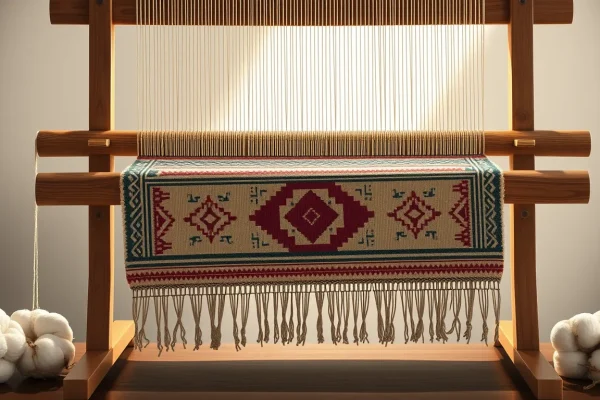
‘Who made it?’ has layers. Ask whether the object came from a household, a workshop, or a collective; who designed it; and which parts were done by hand. For high-value textiles, ask about payment timing as well as technique. Sumbatextile defines direct trade in Sumba cloth as a specific, checkable arrangement: the price is agreed with the weaving household before the work begins, materials are funded upfront rather than carried as debt by the weaver, and payment does not wait for the piece to sell at the other end of the chain (Sumbatextile).
That definition is useful because it gives you follow-up questions. If a seller says a cloth is direct trade, ask when the price was agreed and who paid for the yarn and dyes. The timing matters for naturally dyed work: a naturally dyed hinggi — a woven cloth from Sumba — can occupy a weaving household intermittently for the better part of a year, because morinda and indigo colours are built through repeated immersions with long drying intervals. If the household must finance a year of materials and wait until sale to be paid, the source argues, the financing risk sits with the least capitalised party in the chain. That is why a direct-trade claim is more convincing when it describes process and payment, not just goodwill.
Materials: what to inspect
Material-specific checks are more reliable than generic labels. For ceramics and terracotta, look for evenness of glaze and firing; for bamboo and rattan, tightness and consistency of weave; for textiles, pattern precision and dye quality (Balibhumi). These checks do not tell you whether the price is fair, but they help you see whether the object is well made within its own category.
For textiles, a natural-dye claim deserves a specific conversation. Ask which dyestuffs were used, how many dye cycles the cloth received, and how the colours are expected to age. On Sumba, the Sumbatextile source describes morinda and indigo colours being built through repeated immersions with drying intervals, which is one reason naturally dyed cloth can take so long. Do not assume that every earth-toned cloth is naturally dyed, or that every bright cloth is synthetic; the making process, not the palette, is the evidence.
Provenance: what counts as evidence
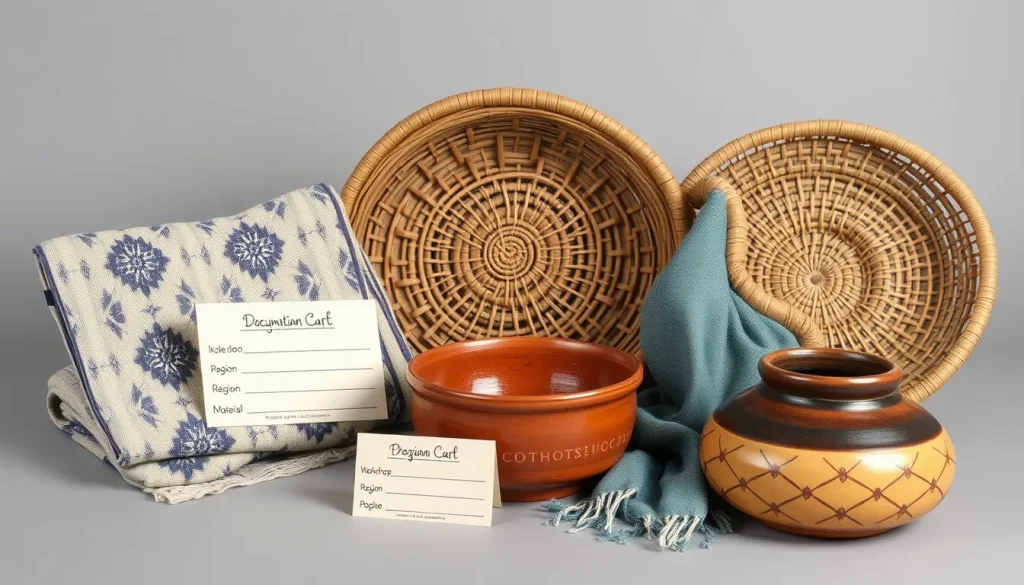
Provenance is the record of where an object came from and who made or handled it. In a craft purchase, it can be as simple as a receipt that names the seller, the place, the date, the maker or workshop, and the material. For collectible or high-value pieces, ask for more. One Indonesian craft seller, Daun, describes its collectible documentation as provenance records, cultural context, and proof of authenticity rather than mere certificates, and its sample record lists region, workshop, and material (Daun Collectors Corner). That is a useful standard to test against even if you are buying from a market stall.
A certificate alone is not a full provenance record. Ask what the document actually records: Does it name a specific maker or workshop? Does it name a province or village? Does it describe the material and process? If the answer is only a generic story about Indonesian culture, treat it as context rather than proof of a particular maker. The same caution applies to the word ‘Balinese’: it may describe a style, a shop’s location, or an object made elsewhere and sold in Bali.
A practical buying sequence
- Set a total budget before you shop. Include packing, baggage, or shipping. Photos4Travel notes that a large carving or fragile bowl can cost much more to transport than a small textile (Photos4Travel).
- Ask for origin and maker first. A region and a workshop or household are more useful than ‘local’ or ‘traditional’. If the seller cannot explain the origin, treat the object as style-led rather than provenance-led.
- Inspect according to material. Use the checks above for ceramics, basketry, and textiles; do not apply a ceramic standard to a woven bag.
- Ask payment questions for high-value textiles. If direct trade is claimed, ask when the price was agreed and who funded the materials (Sumbatextile).
- Request documentation that matches the price. For an inexpensive souvenir, a receipt with seller, place, date, and object details may be enough. For a collectible, ask for a record that names the maker, workshop, region, material, and any cultural context the seller claims (Daun Collectors Corner).
- Confirm transport before paying. If the piece is fragile or large, ask how it will be packed and whether shipping is insured; get the terms in writing.
What the label does not tell you
Three labels cause most confusion. Handmade can mean a person shaped or wove the object, but it does not say who, where, or how they were paid. Local can mean made in the same province, made elsewhere in Indonesia, or simply sold locally. Natural can describe a dye, a fibre, or a marketing mood; ask for the specific material or process. None of these words is useless, but each needs a follow-up question.
What to confirm before you buy
The sources used here were retrieved on 6 November 2026. They describe general patterns and examples of documentation, not a live list of shops, prices, or shipping terms. Stock, makers, materials, and paperwork vary by seller, so confirm the specific object rather than relying on a category. If you are shopping with a driver or guide, say which stops you want and whether you are comfortable with commission-based introductions; Photos4Travel notes that you can decline an unplanned shop without turning the journey into a dispute (Photos4Travel).
Before paying, ask for the seller’s name, the object’s origin and maker, the material, the price and what it includes, and the delivery or packing arrangement in writing. That small record is often the difference between a souvenir with a story and a craft you can actually account for.
FAQ
Is it enough to ask whether a craft is handmade?
It is a start, not a full answer. Ask who made it, where, and from what material. Photos4Travel's Bali shopping guide frames the useful question as who made an object, what it is made from, and how it will be used (Photos4Travel).
Can a shop in Bali sell crafts made outside Bali?
Yes. A shop can legitimately sell work from elsewhere in Indonesia; the useful test is whether it explains that origin rather than presenting every object as locally made (Photos4Travel).
What does direct trade mean for Sumba cloth?
Sumbatextile defines it as a specific arrangement: the price is agreed with the weaving household before work begins, materials are funded upfront, and payment does not wait for the piece to sell at the other end of the chain (Sumbatextile).
What documentation should I ask for?
At minimum, ask for a record that names the seller, place, date, maker or workshop, and material. For collectible pieces, Daun's documentation example lists provenance records, cultural context, and region, workshop, and material details (Daun Collectors Corner).