A guide to Indonesia can look current and still be wrong. The page may say ‘updated 2026’, but the visa paragraph, ferry timetable or entry fee may have been copied from an older source. The practical test is not whether the page looks fresh. It is whether the specific detail you need was checked recently, against the body that operates or regulates it.
That routine matters because travel information now arrives through blogs, forums, apps, video and social feeds. Nomadic Matt cites a planning figure of more than 20 websites and over 40 hours for a trip, which makes it easy for an old page to sit beside a new one in search results. The method below adapts general freshness checks to Indonesia’s official sources and to the details most likely to change.
Why a single update date is not enough
Travel facts have different shelf lives. A guide’s explanation of temple etiquette may remain useful for years; a visa category, port of entry, ferry departure, airport transfer price or volcanic alert can change much faster. MyFT.net’s 2026 guide to outdated travel advice puts it plainly: a page can carry today’s date and still be wrong, because sites refresh timestamps without rechecking facts. Treat the page date as a clue, not a certificate.
Read the date attached to the claim
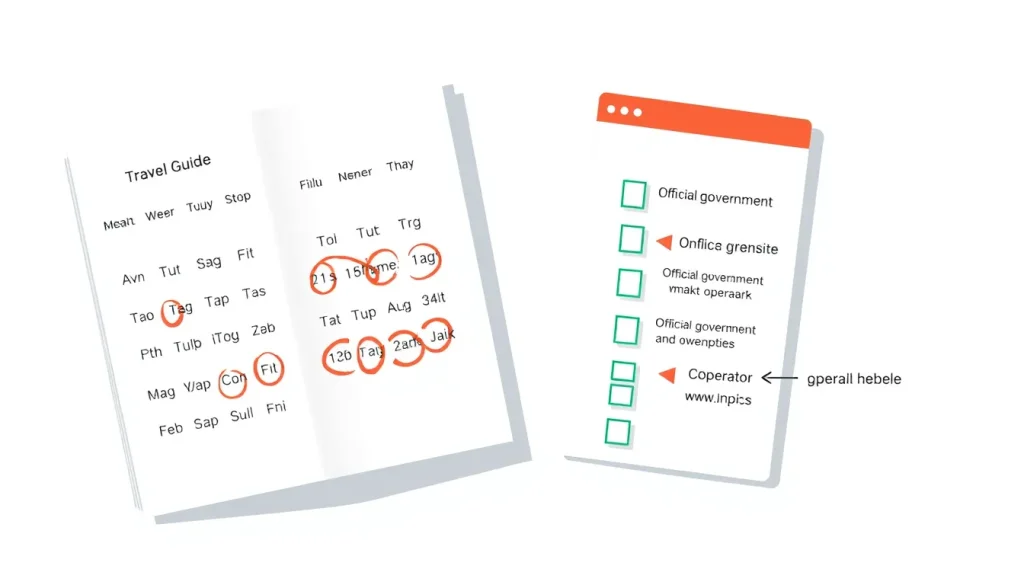
Look for three dates: publication, last update, and the date the author says they made the trip or checked the detail. MyFT recommends finding the publish date and any separate last-updated date, then looking for the author’s actual trip dates rather than the post date. A line such as ‘ferry times checked in March 2026’ is more useful than ‘updated yesterday’.
Editorial policies can show what a site means by an update. eastjakarta.com’s editorial policy says prices and opening hours carry the month they were checked; when an official source is missing, it cross-checks at least two reputable sources and hedges the figure. That is a stronger signal than a generic refresh date. Use this as a test: if a guide does not say when the volatile detail was checked, its confidence is unearned.
Trace the claim to the operator or agency
For any claim that affects money, access, safety or legality, find the primary source. In Indonesia, the relevant official starting points include the Directorate General of Immigration (imigrasi.go.id) for visas and e-VOA, the Directorate General of Customs and Excise (beacukai.go.id) for customs, the tax directorate (pajak.go.id) for tax matters, BMKG for weather and earthquake or tsunami advisories, and MAGMA Indonesia for volcanic alerts. Indonesia Knowledge’s source page also points to the Bali tourist levy portal, the Indonesia e-Customs Declaration and the MOLINA e-VOA portal. These addresses tell you where confirmation lives; they do not mean every guide has used them.
For transport and attractions, go to the operator or venue. An editorial policy from eastjakarta.com gives examples such as KAI Commuter, TransJakarta, LRT Jabodebek and InJourney Airports for transport, and an attraction’s own website or ticketing page for visits. Where no official page exists, cross-check at least two reputable sources and keep the more cautious figure.
If the guide gives no link, search the exact operator or agency name with the detail in question. Be aware that an old blog post can repeat an older rule. MyFT advises following the claim back to whoever published it first, not stopping at the first result that agrees.
Test the exact scope of the detail
A detail can be right in general and wrong for your case. Check the same port, office, route, ticket type, month and traveller category. ‘Visa on arrival’ is not enough if the guide does not say which category, which entry point and which date. ‘Ferry daily’ is not enough if the route has changed operator or the season affects sailings. A rupiah amount is not enough if the guide does not say whether it is per person or per vehicle, what it includes, and when it was checked.
For prices, require original currency, unit, inclusions and observation date. For journeys, separate the main travel time from total time with transfers. For opening hours, check whether the venue means last entry or closing time. Those distinctions are not pedantry; they are usually where a stale guide fails.
Treat entry, safety and access as fast-changing
Entry rules, customs allowances, safety advisories and access to volcanic areas deserve a final check close to travel. MyFT recommends confirming entry and safety rules on an official page. For Indonesia, that means the immigration and customs portals above for entry, BMKG for weather and earthquake or tsunami information, and MAGMA Indonesia for volcanic alerts and access status. If a guide and an official alert disagree, the official alert should control your decision.
Indonesia is an archipelago with regional and operator differences. A rule, timetable or access note that applies in one province, port or operator should not be assumed to apply elsewhere. Confirm the actual location and service, not just the island name. This is a general caution; it does not require naming a destination to be useful.
Judge the guide’s editorial signals
Green flags include a date next to the specific claim; links to the operator, agency or venue; original currency and unit; words such as ‘about’ where a figure is approximate; a note when sources disagree; and a clear separation between the author’s trip and a later update. These are the behaviours recommended in the sources above.
Red flags include ‘updated 2026’ with no claim-level dates, no source links, prices without a month, entry rules with no official reference, and confident phrasing about volatile details. A guide can be honest and still old. The problem is not age by itself; it is undated confidence.
Culture and food advice often ages more slowly, but local practice still varies by community and venue. For those sections, look for named practitioners, museums, local writers or specialist sources, and treat broad statements about ‘Indonesian culture’ as a prompt to check the specific place.
A one-minute check for a single claim
- Write down the exact claim and the place, operator, date and traveller type it applies to.
- Find the date the guide attaches to that claim. If there is none, mark it unverified.
- Open the primary source: official agency, operator, venue or ticketing page.
- Compare scope. Does the source cover the same port, route, ticket, month and category?
- If sources disagree, prefer the official source and the more cautious figure, and note the date you checked.
- Recheck before you act, especially for entry, transport, payment and safety details.
This routine is deliberately small. It will not turn a weak guide into a good one, but it prevents a single stale paragraph from becoming a travel problem.
What to do when the guide is still useful but old
Keep the guide for context, route ideas and cultural explanation. Replace its volatile details with current official information. If the guide is old but transparent about its dates, you can use it as a starting point. If it hides its dates or presents old details as current, use it only for background and verify anything that affects money, access or safety. A dated guide is not automatically unreliable; an undated one is harder to trust.
What to confirm before travelling
Before departure, confirm your visa or e-VOA route through the immigration or MOLINA e-VOA portal, the customs declaration through the e-Customs page, any local tourist levy through the official portal, transport through the operator, and weather or volcanic access through BMKG and MAGMA Indonesia. Indonesia Knowledge’s source page is a useful index of those starting points, but the responsible agency or operator remains the final check.
No article can certify that every guide is current. The useful standard is narrower: can you see what was checked, when, and against which responsible source? If yes, you can make a sensible decision. If no, treat the guide as a lead, not a final answer.
FAQ
Does an ‘updated 2026’ label make an Indonesia travel guide reliable?
No. A site can refresh its timestamp without rechecking the facts. Check the date attached to the specific claim and confirm volatile details against the responsible operator or official Indonesian source.
Which official Indonesian portals should I start with for entry rules?
For visas and e-VOA, start with the Directorate General of Immigration or the MOLINA e-VOA portal. For customs, use the Directorate General of Customs and Excise and the Indonesia e-Customs Declaration. Indonesia Knowledge lists these starting points; always confirm the rule for your nationality, entry point and travel date.
How often should I recheck volatile travel details?
There is no universal interval. Recheck close to travel, and again before acting, for entry rules, transport, local levies, opening hours, and weather or volcanic access.
Is an older guide useless?
No. It may still be useful for context, route ideas and culture. Replace its fast-changing details with current official information, and treat undated claims about money, access or safety as unverified.