
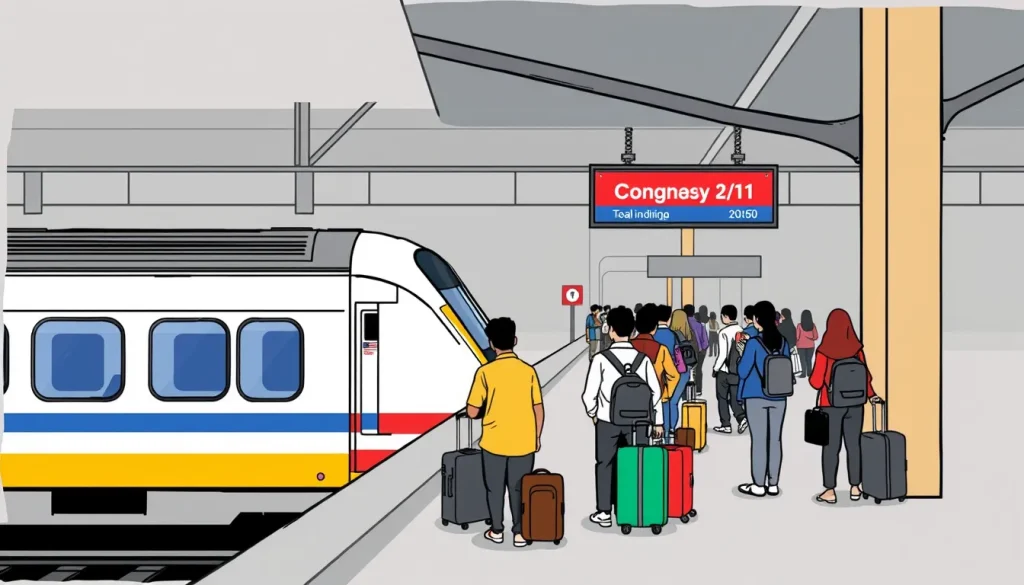
Java has an extensive, modern intercity rail network, and for many journeys between the island’s main cities the train is a more comfortable and more predictable option than a long road trip. The part that surprises first-time foreign riders is rarely the train itself. It is the paperwork: the confirmation you receive after paying is normally a voucher, not the ticket that gets you onto the platform.
The short version of the process is this. Book through the operator’s own channels or an English-language reseller, enter each passenger’s name and passport number exactly as they appear in the passport, pay before the reservation’s payment deadline, and keep the confirmation to hand. On the day, arrive with enough time to turn that confirmation into a boarding pass at the station before departure. Everything else in this guide supports those four steps.
What KAI runs, and which service you are actually booking
Intercity trains in Indonesia are operated by KAI (Kereta Api Indonesia). Those intercity services are the ones most visitors use to travel between Java cities, and they also form the rail corridor in Sumatra. KAI’s passenger network is broader than that, however: it also includes urban, local, airport and tourist services, and those do not all share a single booking flow. A search for a short local journey may send you to a different product, with a different sales window or a different kind of ticket. Before comparing prices or times, establish whether the journey you want is an intercity service or a commuter, airport or tourist train — because that determines where and when you can buy it.
For a first trip, the classic corridor is Jakarta to Yogyakarta, and it also extends onward toward Malang. Departures from Gambir station in central Jakarta run through the densely built outskirts, past rice paddies and banana groves, and into the central Javanese plains. That transition is one of the reasons people choose the train over a flight on this route.
Booking: the channels most readers will use
There are three practical routes to a reservation, and they differ mainly in interface and payment handling rather than in the trains themselves.
- KAI’s own app and website. Booking through the operator means selecting the correct origin and destination stations, the travel date and the service, then entering passenger details that match each traveller’s identity document. For a foreign visitor, that means the name and passport number exactly as shown in the passport.
- English-language resellers. 12Go is built for foreign travellers: it is in English, accepts foreign cards, and issues a clear PDF that explains the voucher-to-ticket process. tiket.com is another Indonesian booking platform that sells train tickets and lists its passenger terms in English.
- Onward connections and multi-leg trips. If your journey combines a train with a flight, ferry or bus, a reseller can sometimes hold the pieces together in one confirmation, which simplifies the paperwork on arrival.
Two rules apply whichever channel you use. First, the name on the e-ticket or boarding pass must match the name on the identification the passenger presents; a mismatch is a problem at the gate, not at the payment screen. Second, a reservation is only held until the on-screen payment deadline, so treat the countdown as real rather than as a suggestion.
Be aware, too, that sales windows differ between products. Intercity seats, local services and airport trains may not open for booking at the same distance ahead of travel, and a journey that shows no availability may simply not be on sale yet rather than sold out.
Voucher, confirmation and boarding pass are three different things
This is the single most useful distinction to understand before your travel day. A confirmed booking and the boarding pass used at the station are separate steps. The PDF or printout you receive after paying functions as a voucher: it proves the reservation exists, but it is not the document you scan or show to board. Some stations and services require you to exchange it, or to complete a check-in step, before you can proceed to the platform.
Practically, keep the confirmation available in two forms — on your phone and as a printed copy — since a flat battery or a broken screen should not be the thing that ends your journey. Then build the exchange step into your arrival at the station rather than discovering it at the gate.
Stations: read the station name, not just the city
Large Indonesian cities often have more than one station, and different services use different ones. Jakarta’s main intercity departures leave from Gambir in the city centre, while Yogyakarta’s departures use Tugu station. Where a city has several terminals, the city name on your booking is not enough information: check the specific station printed on the confirmation and plan your transfer to that station, not to the one that happens to be most familiar or most central.
Station layout matters for timing as well. Intercity stations handle a mix of passengers, and the check-in, exchange and waiting areas may not be in the same place as the ticket counters you first see. If you are changing from a flight or a long bus leg, allow time for the transfer between arrival point and station before you think about the train itself.
Travel-day preparation
The requirements below come from KAI-related booking terms as published by tiket.com and from booking guidance for foreign travellers. They are the checks worth doing the night before, not at the gate.
- Identification. Passengers aged 17 and above must present valid identification — a national ID card, driver’s licence, passport, employee card (KTA), student card, or other valid proof of identity. Foreign visitors should carry the passport itself, and the name on it must match the booking.
- Booking and boarding documents. Have the confirmation and, once obtained, the boarding pass ready together. The boarding pass is what the name-match rule is applied to.
- Arrival buffer. No single recommended arrival time applies across stations and services, so work backwards instead: exchange or check-in, security screening if present, finding the platform, and boarding. Add a margin for a station you have never used.
- Pregnancy. The published terms state that expectant mothers between 14 and 28 weeks of gestation must carry a medical certificate from an obstetrician or midwife confirming gestational age, a healthy pregnancy and no abnormalities, and must be accompanied by at least one adult.
- Infants. Children under three travelling with an adult, at the adult fare and not occupying a seat, are exempt from charges under the same published terms.
Luggage allowances, onboard facilities, seat classes and accessibility provisions vary by service and are not settled by a general guide. Ask the operator or your booking platform about the specific train you have reserved, particularly if you are travelling with large bags, a bicycle, or a mobility aid.
What to confirm before you travel
Schedules, fares and availability change, and this guide does not verify any of them for a particular date. Before departure, confirm four things directly with KAI or your booking platform: the departure station and time as printed on your latest confirmation; whether your service is intercity, local, airport or tourist, and therefore which check-in procedure applies; the current refund and rescheduling rules for your fare; and whether your ticket requires an exchange at the station or can be used directly.
This article was researched in November 2026 from published booking guidance and travel accounts; the sources describe booking steps and passenger terms in general rather than any single station’s current layout, timetable or prices. Treat the process as stable and the operational details as things to re-check close to your travel date.
Your next step
If you are still choosing a route rather than a departure, start with an overview of the Jakarta–Yogyakarta–Malang corridor at Indie Traveller’s Java by train guide, which covers classes, ticket purchasing and what to expect onboard. When you are ready to book, use the BaliGenie walkthrough of online booking as a checklist for passenger details and payment deadlines, or book through tiket.com’s train service and read its passenger terms before paying.
FAQ
Can I board with the PDF I received after paying?
Usually not. The PDF is typically a voucher or booking confirmation, and a confirmed booking and the boarding pass used at the station are separate steps. Keep the confirmation available, then complete the exchange or check-in procedure at the station before departure.
Can foreign visitors pay for Indonesian train tickets with an international card?
Resellers aimed at foreign travellers, such as 12Go, are in English and accept foreign cards. If you book through KAI's own app or website, check the accepted payment methods for your card before relying on that channel.
Which station should I go to in Jakarta or Yogyakarta?
Jakarta's main intercity departures use Gambir station in the city centre, and Yogyakarta departures use Tugu station. Cities can have more than one station serving different services, so go by the station name printed on your confirmation rather than by the city alone.