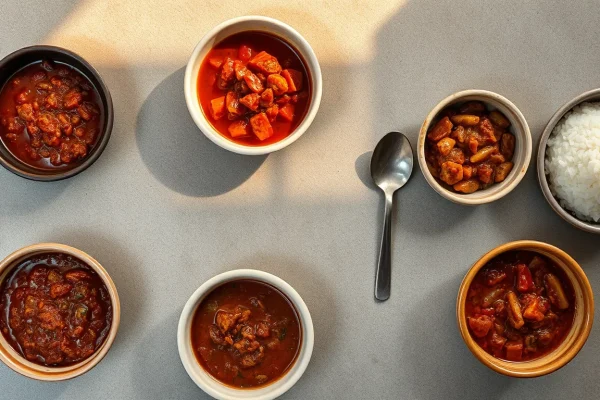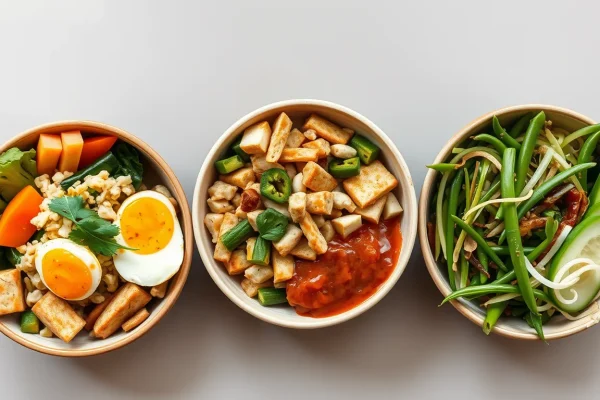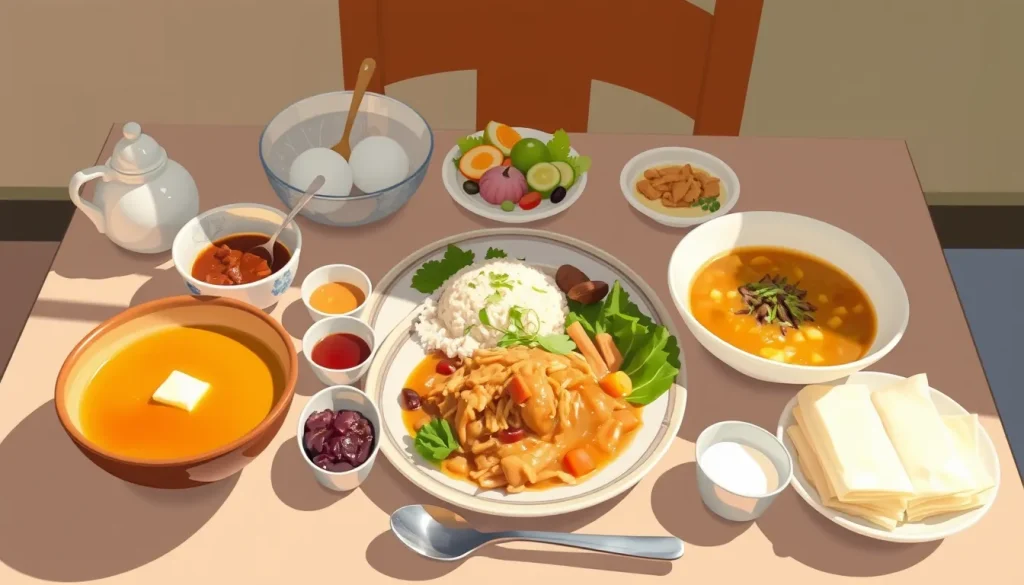
Indonesian breakfast is less a single menu than a set of early-morning habits. In many neighborhoods, the first meal comes from a warung — a small food stall or simple shop — or from a street vendor who has been cooking since before dawn. The food is usually savory, filling and built around rice, noodles, porridge or soup rather than toast, cereal or fruit. For a visitor, the useful question is not ‘What is the national breakfast?’ but ‘What is available near me, and how is it eaten?’
The meal also runs on an early clock. Stallholders often open before dawn, peak trade is commonly around 6 to 7 a.m., and by 9 a.m. some of the best-loved dishes may already be sold out, according to Indonesia Unlocked’s guide to Indonesian breakfast culture. That practical rhythm matters more than a fixed menu: later in the morning, choice narrows.
How the everyday breakfast works
Breakfast in Indonesia is not usually a lighter, gentler version of lunch or dinner. It is a proper savory meal, and many people eat it at a stall, take it away, or buy it on the way to work or school. The Indonesia Unlocked guide describes a breakfast culture that does not traditionally center on toast, cereal or fruit-forward eating; the familiar pattern is a warm, substantial dish with rice or noodles, often with broth, coconut milk, chilli or sweet soy sauce.
That does not mean every Indonesian eats the same thing. A warung may serve one specialist dish, such as soto or bubur, while a market stall might offer rice, fried items and noodles. Office workers, students, market traders and travelers all use the same early window, but their choices depend on what is nearby, what is affordable and what the stall does well. The safest approach for a visitor is to look for a place with a short menu and steady local trade, then order the dish it is known for.
Four everyday foundations: rice, porridge, noodles and soup
Most breakfast menus can be understood through a few foundations. Rice appears as plain rice, fried rice (nasi goreng), rice cooked in coconut milk, or compressed rice cakes (lontong). Porridge, especially bubur, is a soft rice dish often served with toppings. Noodles can be boiled, fried or served in broth. Soup, including soto, is a morning staple in many regions. ISEE Indonesia’s recipe collection groups nasi goreng, bubur and noodles among the comforting dishes served for breakfast, and notes that coconut milk, shallots, garlic, turmeric, sweet soy sauce and chilli recur in many dishes (ISEE Indonesia).
These ingredients explain the flavor profile: coconut milk brings richness, shallots and garlic build the base, turmeric adds color and earthiness, sweet soy sauce (kecap manis) gives sweetness, and chilli or sambal supplies heat. The combinations differ by region and household, so the same dish name can taste quite different from one town to the next. For a first breakfast, choose one foundation rather than ordering several heavy dishes: rice with a simple side, a bowl of bubur, or a bowl of soto is enough to understand the style.
Regional dishes and what they show
Regional names are useful because they point to a cooking tradition, not a strict border. Lontong sayur, for example, is commonly described as a Betawi or Jakarta breakfast: lontong, a firm compressed rice cake, is served with a vegetable curry-like coconut-milk sauce. Woman Indonesia’s round-up of regional breakfast menus lists lontong sayur as a popular Jakarta/Betawi morning dish (Woman Indonesia). It is a good example of how a breakfast can be both filling and vegetable-based, with the rice cake taking the place of a plain plate of rice.
Soto is the clearest illustration of regional variation. The word covers a family of Indonesian soups made with meat and vegetable broth; the meat may be beef or chicken, and some versions use pork or goat. FactsofIndonesia’s list of common breakfast menus names soto Madura, soto Pemalang, soto Lamongan, soto Semarang, soto Kudus, soto Betawi, soto Padang, soto Bandung, soto Sokaraja, soto Banjar and coto Makassar as examples (FactsofIndonesia). The names indicate place traditions and often imply differences in broth, meat, herbs and accompaniments. A traveler does not need to memorize them all; it is enough to know that ‘soto’ is a soup and that the regional name tells you which style you are likely to get.
Nasi goreng (fried rice) and bubur (rice porridge) are equally useful entry points. Nasi goreng is a quick, savory rice dish that can be eaten at any meal but is common in the morning; bubur is softer and often gentler in flavor, though it can be topped with savory garnishes. Noodles appear in many forms, from brothy noodle soups to fried noodles. These dishes are not an exhaustive list of Indonesian breakfast, but they cover a large share of what a visitor will see at ordinary stalls.
Ordering at a warung
At a simple warung, ordering is usually direct. Point to what you want, say the name if you know it, and ask whether rice or lontong is included. Portions are often modest, so it is normal to order one dish and add a side if still hungry. The seller may ask whether you want it spicy; chilli and sambal are often served separately or added during cooking, so ‘not spicy’ is a useful request if you are unsure. Do not assume that a dish is vegetarian because it looks vegetable-based: coconut milk, broth, shrimp paste, fried shallots or meat can be part of the base.
For dietary needs, ask concrete questions rather than relying on a menu label. Useful questions include: Is there coconut milk in this? Is there meat or meat broth? Is there shrimp paste or fish sauce? Are there peanuts in the dish or in the topping? Is the chilli already mixed in? In a busy stall, keep the questions short and ask before the dish is assembled. This article cannot guarantee that any specific stall avoids cross-contact or hidden ingredients; the cook is the right person to confirm what is actually in the pot.
A simple first-morning plan
For a low-risk introduction, start with a market or a cluster of warungs rather than a hotel restaurant. Arrive before 8 a.m., when the choice is widest. Look for a stall with a short menu and a queue of local customers; that is a better signal than a long multilingual menu. Order one dish — bubur if you want something soft, soto if you want broth, nasi goreng if you want familiar fried rice — and ask whether rice, lontong or noodles are included. Eat it there if seating is available, because the dish is usually served hot and the seller can explain the accompaniments.
If the first stall does not suit your dietary needs, move on. Indonesian breakfast is not a single restaurant experience, and there is no need to force a dish that contains ingredients you cannot eat. A second stall may serve plain rice, noodles or a vegetable dish that fits better. The point of the morning is to observe how the neighborhood eats, not to tick off a national checklist.
Regional and community differences
Indonesia’s food traditions vary by island, province, city and community, and breakfast is no exception. A dish associated with one city may be sold widely elsewhere, and a family recipe may differ from the stall version. The regional lists used here are guides to common associations, not rules about what every person eats. Lontong sayur is linked to Betawi/Jakarta in the source above, while soto has many named local styles across Java, Sumatra, Kalimantan, Sulawesi and beyond. In a diverse country, the more accurate statement is that breakfast is locally available and locally named, not that one national plate represents everyone.
This is also why travelers should resist treating a single breakfast as ‘the authentic Indonesian breakfast.’ A market in Jakarta, a family home in North Sulawesi and a street in Makassar may all serve savory morning food, but the dishes, garnishes and eating times can differ. The common thread is the early, savory, filling approach; the details belong to the place.
What to confirm before you go
The sources used for this guide are general food and culture articles, published between 2018 and 2023 and retrieved for background on 6 November 2026. They are useful for understanding dish names, regional associations and the general rhythm of breakfast, but they cannot confirm a particular stall’s current opening hours, prices, menu or availability. In Indonesia, many small food businesses change hours with the market, holidays and the owner’s schedule.
Before setting out, check the practical details with the place you plan to visit: whether it opens early, whether it sells out, whether it accepts cash or mobile payment, and whether the dish you want is available that day. If you have an allergy or a strict dietary requirement, ask the cook directly and be prepared to choose a different stall. For a first morning, the simplest plan is to go early, choose a busy stall with a short menu, order one recognizable dish such as bubur, soto or nasi goreng, and ask what is in it before eating.
FAQ
Is Indonesian breakfast always rice-based?
No. Rice is common, but noodles, bubur (rice porridge) and soups such as soto are also eaten. A stall may specialize in just one of these.
What time should I eat breakfast in Indonesia?
Go early. Many stalls open before dawn; peak trade is often 6-7 a.m., and some popular dishes sell out by 9 a.m. (Indonesia Unlocked).
How do I ask about ingredients?
Ask the cook directly: Is there coconut milk? Is there meat broth? Are there peanuts? Is it spicy? Keep questions short at a busy stall. A specific stall cannot be guaranteed for allergy safety.