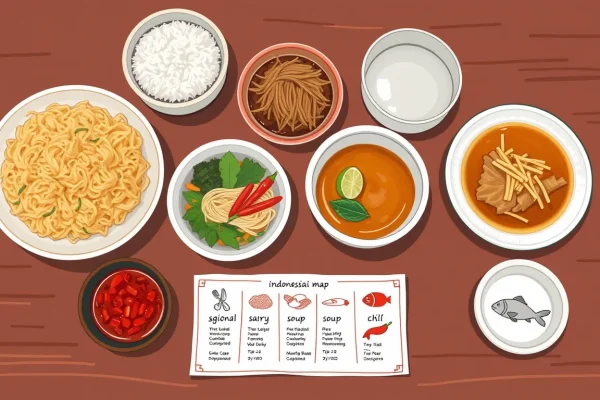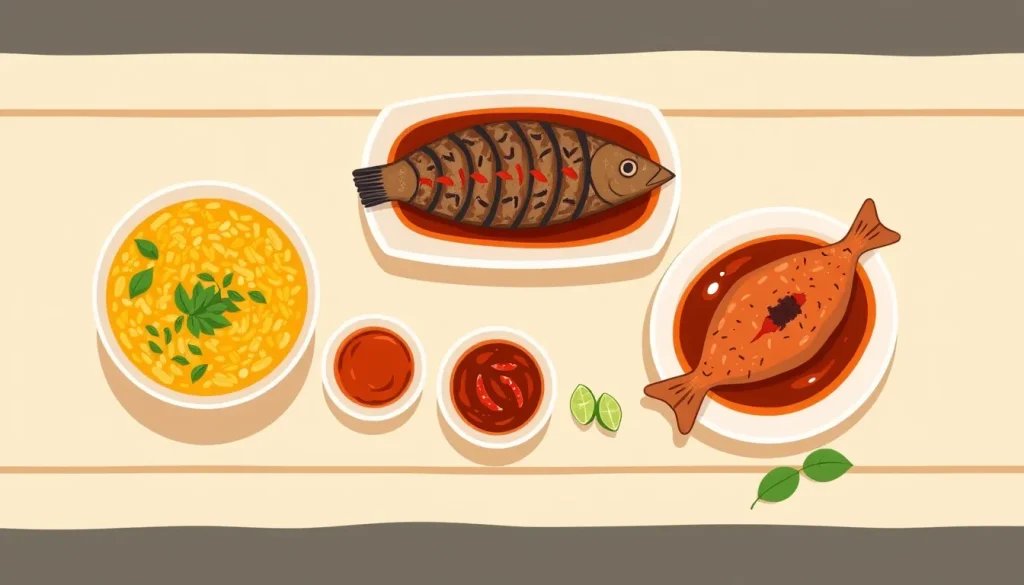
Minahasan cuisine, widely called Manadonese cuisine after the city of Manado, is the cooking tradition of the Minahasa people of North Sulawesi, the northern peninsula of the island of Sulawesi. It is known for rich seafood, generous spicing, very hot condiments, unusual meats, and a tradition of European-influenced cakes and pastries. For a visitor, the practical summary is short: expect heat, expect pork on many menus, expect excellent fish, and expect a small set of dishes to appear almost everywhere you eat.
What the term covers
Minahasan food is a regional kitchen rather than a single style of restaurant. It is associated with Manado, the provincial capital, but also with other North Sulawesi cities such as Bitung, Tomohon and Tondano, all of which are described as culinary centres in their own right. The highland town of Tomohon is the best-known place to see the raw ingredients, including the ones that draw the most attention.
The cuisine has become more visible outside its home region. It is not as widely distributed as Padang food or Sundanese cooking, but Manadonese restaurants have been opening in Indonesian cities including Jakarta, Bandung, Medan, Surabaya and Makassar. That matters for readers who want to try the food without travelling to North Sulawesi: the dishes are no longer confined to the province, though the most complete version of the menu is still there.
Where Minahasa is, and why the food tastes as it does
The Minahasan heartland runs from volcanic highlands down to a coral coast; the diving island of Bunaken lies off the coast near Manado. That geography explains much of the cooking. Fish and seafood come from the sea, while vegetables, herbs and greens come from the cooler uplands. Minahasan communities have organised themselves for centuries and their cooking predates the Indonesian state, which is why the food reads as a regional tradition rather than a national one.
Most Minahasans are Christian, and that single fact shapes the menu more than any other. It also means the kitchen sits apart from most of Indonesia in one obvious way: pork is common. Where a Sumatran or Javanese warung might build its menu around chicken, beef and fish, a Minahasan table can happily include pork alongside seafood and vegetables.
Chilli, ginger, lime, basil and turmeric
The flavour base is consistent even when the dishes change. Minahasan cooks rely on chilli, ginger, lime, basil and turmeric, and the result is a kitchen that is often described as the hottest of Indonesia’s mainstream regional cuisines. Extra-hot condiments are part of the standard setup rather than an optional challenge, so a diner who finds sambal at a Jakarta food court bracing should treat a Minahasan meal as a step up rather than a side move.
Heat is not the whole story. Lime and basil give the food a sharp, herbal edge, ginger adds warmth, and turmeric supplies both colour and an earthy background note. The overall effect is bright and aromatic rather than simply punishing, which is why the cuisine has a following well beyond people who chase extreme spice.
Rica-rica and woku
Two spice approaches dominate menus. Rica-rica is a chilli-forward preparation used with chicken, fish and seafood. Woku is the other standard, and it leans more heavily on herbs and aromatics, including basil and lime. Both are best understood as methods rather than fixed recipes: the same name can produce quite different results from one kitchen to the next, and asking what a particular version contains is more useful than assuming.
The dishes to know
You do not need to memorise a long menu. A small group of dishes covers most of what a first-time visitor will encounter, and they are the ones worth ordering deliberately rather than by accident.
| Dish | What it is | Notes |
|---|---|---|
| Tinutuan (bubur tinutuan) | Rice porridge with vegetables, coloured with turmeric | Includes sweet yellow squash, corn, cassava, spinach, water spinach and lemon basil; a staple brunch dish, especially associated with Manado’s Wakeke area |
| Cakalang fufu | Smoked skipjack tuna | One of the region’s signature seafood products |
| Cakalang noodles | Noodles served with skipjack tuna | A common, everyday form of the same fish |
| Rica-rica | Chilli-based spice preparation | Applied to chicken, fish and seafood |
| Woku | Herb-and-chilli spice preparation | Applied to chicken, fish and seafood; basil and lime are typical |
| Brenebon | Bean soup | Part of the standard list of popular Manadonese dishes |
| Chicken tuturuga | Spiced chicken dish | Often listed with the core repertoire |
| Paniki | Spiced fruit bat | See the section on bush meat below |
Pork, faith and a different Indonesian menu
The Christian majority in Minahasa is the reason pork appears so freely. This is one of the clearest differences between Minahasan cooking and most other Indonesian regional kitchens, and it has practical consequences for travellers. A visitor who avoids pork for religious or personal reasons should not assume that a Minahasan restaurant is a safe default; the reverse is also true, and someone hoping to try the region’s pork dishes will find them far more easily here than in most of the country.
Because the cuisine is regional rather than religiously defined, individual kitchens vary. Some are run by families with their own recipes, some serve alcohol, some do not, and some will happily adjust a dish. All of this is best settled by asking rather than by reading a general article, including this one.
Bush meat and the Tomohon market
Some highland kitchens also cook bat, forest rat, dog and snake, and the meat section of Tomohon market is the most visible place where this side of the cuisine is encountered. BBC Travel’s account of the market describes bats separated from their wings, a python being cut open, bush rats impaled on sticks and piled up like kebabs, and dogs and cats present in the same area. The same report notes that a butcher jointed a dog carcass for sale while live cats and dogs sat nearby.
This is not a novelty invented for tourists; it is part of a real regional food culture, and it is also contested, including within Indonesia. Readers should decide in advance whether they want to see it. A market visit is not compulsory, no one is obliged to eat anything, and a willingness to look is not the same as approval. Treat vendors as people doing their job rather than as exhibits, and ask before photographing anything or anyone.
Ordering and eating: practical notes
Most everyday eating happens at warung (small family-run food stalls) and simple restaurants rather than at destination dining rooms. Menus are often short, and the day’s dishes may be displayed rather than written down. Pointing, asking what is available, and choosing from what you can actually see is a normal way to order.
- Ask about heat before you commit. The Indonesian phrase kurang pedas means “less spicy,” but in North Sulawesi it may still arrive hot. It is worth saying it more than once, or asking what the kitchen can realistically do.
- Ask what is in a dish. Rica-rica and woku refer to methods, so the ingredients change with the main protein and the cook.
- Ask about pork and other restricted ingredients. If you avoid pork, ask specifically about the dish, the cooking fat and the condiments rather than relying on the dish name alone.
- Expect fish to be the safe bet. Seafood and skipjack preparations are central to the cuisine and widely available.
- Breakfast is worth planning around. Tinutuan is a morning and brunch dish, not a dinner special, so an early start is the way to eat it as locals do.
Cakes, pastries and the European layer
Minahasan food also includes a range of European-influenced cakes and pastries, a legacy of the region’s long contact with outside powers. This is easy to miss if you concentrate only on the chilli-heavy savoury dishes, but it is part of what makes the cuisine distinctive within Indonesia. If you are offered something sweet with coffee, it belongs to the same tradition.
What to confirm before you go
Menus, market routines and which stalls are operating change. The Tomohon market scene described by BBC Travel was reported as a Saturday-morning occasion at the time of writing, but market days and the range of goods on sale should be confirmed locally or with a current guide before you build a trip around them. Similarly, this article gives no prices, opening hours or restaurant recommendations: those details are volatile and were not verified for any specific date, so they are better checked against current local sources.
Finally, treat the descriptions above as a map rather than a guarantee. Minahasan cooking is a household tradition as much as a restaurant cuisine, and two cooks in the same town will make tinutuan or rica-rica differently. The most useful preparation is to know the names of a few dishes, understand that pork and heat are both likely, and be ready to ask questions at the table.
FAQ
Is Minahasan food halal?
Not necessarily. Pork is common because most Minahasans are Christian, and individual kitchens vary in what they cook and how. If halal food is a requirement, ask specifically about the dish, the cooking fat and the condiments rather than assuming from the restaurant's regional style.
How spicy is Manadonese food?
It is often described as the hottest of Indonesia's mainstream regional cuisines, and extra-hot condiments are standard rather than optional. You can ask for kurang pedas (less spicy), but expect the result to still have a kick.
What is the difference between rica-rica and woku?
Both are spice preparations rather than single fixed recipes. Rica-rica is chilli-forward; woku leans more on herbs such as basil along with lime and chilli. Either can be used with chicken, fish or seafood, and the exact ingredients depend on the cook.
Can I try Minahasan food outside North Sulawesi?
Yes. Manadonese restaurants have been opening in Indonesian cities including Jakarta, Bandung, Medan, Surabaya and Makassar, though the cuisine is not as widely distributed as Padang or Sundanese food. The fullest version of the menu is still in North Sulawesi.