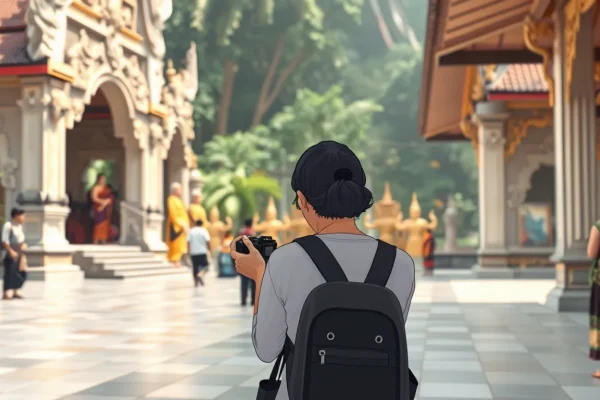
Visiting an Indonesian home or place of worship is rarely governed by a single national rulebook. Indonesia has more than 17,000 islands and around 280 million people, with a Muslim majority and significant Hindu communities, particularly in Bali, along with Buddhist, Christian, and other religious groups. More than 300 distinct ethnic groups follow their own traditions, so etiquette is local and situational. The most reliable guide is often your host or the attendant at the entrance. Travel Etiquette notes this diversity directly.
Several broad courtesies do recur. Remove outdoor footwear when a home or sacred building expects it. Use the right hand when giving, receiving, or eating with your hand. Let the host or venue staff indicate where to sit and what to do next. When in doubt, pause and ask quietly rather than guessing confidently. BaliGenie describes a home visit as a social invitation, not a performance in etiquette—a useful frame for both homes and places of worship.
Why one checklist cannot cover every visit
The practical point is not that anything goes, but that the details change. A household in a Muslim family may have different greeting habits from a Balinese Hindu family or a Chinese Indonesian family. A village mosque, a city mosque, and a Balinese temple will not share the same dress code or visitor policy. Age, gender, region, and the formality of the occasion also matter. Treat any list as a set of defaults, then watch the first minute: where people leave shoes, whether they shake hands or nod, where guests are seated, and whether a drink appears before conversation begins.
Entering an Indonesian home
Shoes at the door
Removing shoes is one of the most consistent home courtesies in the sources. The Office of International Affairs at Universitas Ahmad Dahlan lists shoes as something that must always be removed when entering a home, together with calling before visiting and accepting a drink when one is offered. BaliGenie, updated in October 2026, adds a practical nuance: follow the household’s cue at the entrance. If the host steps out of sandals, leaves shoes on a rack, or points to a tiled step, do the same. If you are unsure whether to cross the threshold, ask ‘Boleh masuk?’—may I come in?
Greetings and the salam
Handshakes are generally acceptable for men and women in Indonesia, but not universally. The UAD guide notes that some Muslim women may acknowledge an introduction to a man with a nod and smile rather than a handshake, and that a handshake should be initiated by the woman. A visitor should therefore not thrust a hand forward first. If a hand is offered, take it lightly.
The traditional salam is a different gesture. It resembles a handshake with both hands but without the grasp: one person offers both hands, lightly touches the other person’s outstretched hands, and brings the hands to the chest to mean ‘I greet you from my heart’. The visitor should reciprocate. In practice, the salam is often offered between people who know each other or in more formal or religious settings; a nod and smile is a safe fallback when you are unsure.
Seating, drinks, and the table
Wait to be seated by the host. Accept a drink if you can; drinks are generally offered to guests, and accepting is polite. If you cannot accept for health or religious reasons, thank the host and explain briefly rather than leaving the glass untouched without comment. At the table, do not begin eating until indicated. Food is usually served from larger dishes in the middle. The host may serve the first portion, but guests generally serve themselves after that. Keep both hands above the table, pass food with your right hand, and use your right hand when eating with your hand.
The right forefinger is not used to point at places, objects, or people. Instead, use the thumb of the right hand with the four fingers folded under. Cultural Atlas also notes that emptying your glass or finishing everything on your plate can signal that you want another refill or serving; if you are full, leave a little and thank the host.
Inside a mosque
Shoes come off before entering a mosque, as they do in many Indonesian places of worship. Dress modestly: for women, this usually means covering hair, shoulders, and legs; for men, covering the torso and legs. Some mosques may provide covering garments, but provision varies, so carry a light scarf or sarong if you are unsure. Non-Muslim visitors are often welcome outside prayer times, but access is not universal. Ask at the entrance before stepping in, keep your voice low, avoid walking in front of someone who is praying, and ask before taking photographs. If there are separate prayer areas, stay in the visitor area or where your host indicates.
At a Balinese Hindu temple
Bali’s temples, or pura, are active places of worship rather than monuments. Remove shoes before entering the inner courtyard or any area where signs indicate. A sarong and sash are commonly expected; many temples rent or lend them at the entrance, but visitors should check rather than assume. Clothing should cover the shoulders and upper legs, and behaviour should be calm. Do not enter a shrine or stand on an altar, and ask before photographing a ceremony or a priest. Some temples observe additional rules on ceremony days or for particular visitors; follow the attendant’s instructions and any written notices.
Churches, viharas, and other sacred spaces
The same principles apply across Indonesia’s other places of worship. Remove shoes where signs or worshippers do. Dress neatly and modestly. Keep phones silent, avoid flash photography, and do not disturb a service. In a church, enter quietly and sit where visitors are welcome. In a Buddhist vihara (temple) or a Chinese klenteng (temple or shrine), follow the incense and offering customs you see, but do not handle ritual objects unless invited. If you are unsure whether a site welcomes tourists, ask at the door or check with a local guide; a respectful ‘no’ is better than an unintended intrusion.
The right hand and other small signals
The right-hand rule appears in several contexts: eating with your hand, giving and receiving objects, and passing food. It is a small signal of attentiveness, not a test of sincerity. If you are left-handed, try to use your right hand in formal moments, and use both hands when handing over something important. Avoid pointing with the right forefinger. These details matter most in formal homes, religious settings, and encounters with older people.
What to confirm before you go
Etiquette advice cannot settle every case. Before a home visit, confirm the time, whether shoes should be left outside, and whether a meal will be served. Before a place of worship, check visitor hours, prayer or ceremony times, dress requirements, whether garments are provided, photography rules, and whether non-worshippers may enter. These details change between venues and over time, so use the venue’s own notice, a phone call, or a local guide rather than an old blog post.
- Is the site open to visitors today, and are there prayer or ceremony times to avoid?
- What should I wear, and are sarong, sash, or head covering required or provided?
- Where do I remove shoes, and is there a safe place to leave them?
- May I take photographs, and are there areas where visitors should not walk?
- For a home visit, should I call ahead, and is there anything the host would like me to bring or avoid?
This guide draws on visitor advice retrieved on 6 November 2026, including sources last updated in 2026. It is a starting point, not a substitute for the house rules or the attendant’s instructions at a particular mosque, temple, church, or home.
If you are about to visit an Indonesian home, wear easy-to-remove shoes, keep clothing neat and comfortable, and plan to follow your host’s lead. For a place of worship, carry a light layer or scarf, check the venue’s visitor policy, and ask before photographing people or rituals. The calm question is usually the most respectful next step.
FAQ
Should I remove my shoes in every Indonesian home?
Removing outdoor shoes is a common and safe default. Many guides state that shoes should be removed when entering a home; others advise following the household's cue at the entrance. Look for a shoe rack, a raised step, or the host's example, and ask if unsure.
How do I greet an Indonesian woman respectfully?
Let her initiate a handshake. Some Muslim women may prefer a nod and smile rather than physical contact. A traditional salam, offered with both hands and brought to the chest, is another courteous option when the other person offers it first.
Can non-Muslims visit mosques in Indonesia?
Access varies by mosque and community. Ask at the entrance, dress modestly, remove shoes, and stay in the area indicated for visitors. Do not assume entry to all prayer spaces.
What should I wear to a Balinese temple?
Modest clothing that covers the shoulders and upper legs, plus a sarong and sash where required. Many temples provide or rent these at the entrance, but check before you rely on it. Follow any additional notices for ceremonies.