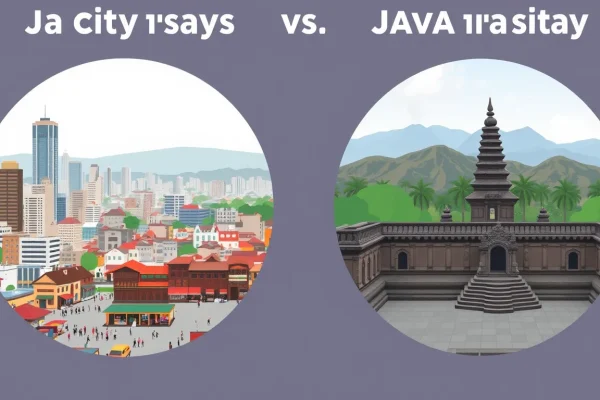
Yogyakarta is the cultural heart of Java and the base for two of Southeast Asia’s most important temple complexes. The city, usually called Jogja, is still shaped by a working sultanate, and its historic core, neighbourhoods, and nearby monuments make it a place where a short trip can feel dense with context. This guide is for a first-time visitor who wants to understand what to see, where to base themselves, and how to plan without treating the city as a checklist.
Yogyakarta in context: city, province, and cultural centre
Yogyakarta is commonly used for both the city and the wider Special Region of Yogyakarta. In travel planning, it usually means the city base from which visitors reach the Kraton, Malioboro, and the nearby temples. The sultan is also the governor of the province, and the city remains the centre of classical Javanese culture: batik (wax-resist textile work), gamelan (ensemble music), wayang (shadow puppetry), and dance (Hostelworld).
That context matters because the city’s sights are not only monuments. The Kraton palace and Taman Sari, the sultan’s garden, are part of a living royal and urban landscape; Lonely Planet lists both alongside browsing Jl Malioboro, the street the guide recommends for wandering (Lonely Planet). At night, Alun-Alun Kidul, the southern royal square, is known for the blindfolded banyan-tree crossing, a local luck-seeking tradition (Lonely Planet). Treat it as a cultural activity to observe or join respectfully rather than a guaranteed spectacle; check local guidance on the spot.
Where to stay: choosing a Yogyakarta base
Yogyakarta is not one homogeneous tourist district. For a first trip, the practical decision is whether you want to be near Malioboro and the historic core, in the backpacker area of Prawirotaman, or in one of the alternative neighbourhoods listed by local guides.
Malioboro and surrounds
GoAsia treats Malioboro and its surrounds as a distinct neighbourhood, and Lonely Planet recommends browsing Jl Malioboro. This is a useful base if your priority is being close to the historic centre, the Kraton axis, and the city’s most visible commercial and cultural corridor (GoAsia; Lonely Planet). Expect busy traffic and commercial activity; ask your accommodation about access and noise before booking.
Prawirotaman
Prawirotaman, south of the Kraton, is described as Yogyakarta’s backpacker area, with cafés and guesthouses (Hostelworld). It suits travellers who want a budget-oriented base with easy access to food and social spaces, but it is not the same as staying beside Malioboro. Check the current state of the street and whether your chosen guesthouse is set back from traffic.
Kotagede and northern Yogyakarta
GoAsia also lists Kotagede and the Northern Yogya and university district as neighbourhoods to consider. These are alternatives for travellers who have already seen the main core or want to stay outside the Malioboro–Prawirotaman cluster. The guide does not rank them; use them as research leads and confirm transport times to the sights you plan to visit.
The cultural core: Kraton, Taman Sari, and everyday Javanese arts
The Kraton palace and Taman Sari’s sultan’s garden are the clearest entry points to Yogyakarta’s royal geography. The Kraton is still connected to the sultanate, and the city’s cultural life includes batik, gamelan, wayang, and dance (Hostelworld). These are not separate museum topics: they are part of how the city presents its identity, from palace traditions to performances and craftwork.
Plan these as a half-day or a relaxed day rather than ticking them off in an hour. Opening hours, ceremony days, and photography rules can change; confirm with the venue or your accommodation before you go. This is especially important because the Kraton is a working palace, not only a museum.
For evening culture, Alun-Alun Kidul’s blindfolded banyan-tree crossing is a local tradition listed by Lonely Planet. It is a good example of how Yogyakarta’s cultural life extends beyond formal performances. Join only if you are comfortable with the crowd and local customs, and follow instructions on site.
Borobudur and Prambanan: the temple trips that shape the itinerary
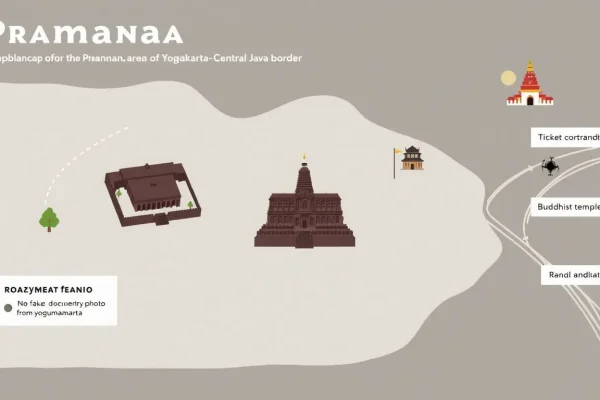
Most Yogyakarta trips are organised around two nearby UNESCO World Heritage Sites. Borobudur is a ninth-century Buddhist temple described as the world’s largest Buddhist temple; Prambanan is a Hindu complex from the same era, with Lonely Planet highlighting its 240 Hindu temples (Hostelworld; Lonely Planet). Both are outside the city centre and are usually visited as separate excursions.
Because they pull in opposite directions, do not leave both to the final afternoon. A practical pattern is one temple complex per day, with the city core on another day. If you have only two days, choose one temple complex and give the remaining time to the Kraton area and Malioboro; trying to fit both temples and the city into one day will make the trip feel rushed.
Transport arrangements, ticket systems, and opening times are operational details that change. Book through a reputable operator or ask your accommodation, and confirm pickup time, inclusions, and whether the ticket is included. The sources used here do not provide current prices or schedules, so they are deliberately not quoted.
How many days do you need?
Hostelworld’s guide suggests three days is the right length for Yogyakarta. That is a useful minimum for a first visit: one day for the Kraton, Taman Sari, and Malioboro; one day for Borobudur; and one day for Prambanan, with time left for food and neighbourhood wandering. Add a day if you want a slower pace, a volcano-focused day trip to Merapi, or more time for arts and neighbourhood life.
A shorter trip is possible, but it becomes a choice between the city’s cultural core and one temple excursion. A longer trip can include Kotagede or the northern university district, but these are neighbourhood choices rather than mandatory sights.
Getting there and getting around
Yogyakarta International Airport (YIA) is about 45 km west of the city centre in Kulon Progo. It handles domestic and international routes, with direct flights from Singapore, Kuala Lumpur, and several Indonesian cities including Jakarta and Bali; the Singapore flight is around two hours (TixLayer). Alternatively, the train from Jakarta takes about 7–8 hours (Hostelworld).
For local movement, Grab and Gojek are the main ride-hailing options mentioned by Hostelworld. They are useful for short city trips and for reaching areas that are not on a convenient walking route. At airports, stations, and major attractions, pickup zones can be separate from drop-off points; follow signage and confirm the meeting point in the app. If you are carrying luggage or arriving late, arrange your first transfer in advance rather than assuming an app car will be waiting.
The city is also walkable in parts, especially around Malioboro and the Kraton axis, but heat, traffic, and uneven pavements make short app rides useful. This is not a reason to skip walking; it is a reason to plan the day in clusters.
When to go
GoAsia rates May to October as the best months for Yogyakarta, with November to March mixed to poor and January the poorest. That aligns with the drier part of the year, but it is still a tropical climate: short heavy showers can occur, and conditions vary by year. Use the seasonal pattern to choose a window, then check a current forecast before you travel.
The active volcano Merapi rises to the north of the city (Hostelworld). If you plan to visit the Merapi area, check local conditions and operator advice; volcanic activity and access can change independently of the city’s weather.
Practical checks before booking
Entry and visa rules: The supplied sources do not cover current visa or entry requirements for Yogyakarta. Check the official Indonesian immigration or embassy website for your nationality before booking.
Opening hours and ceremonies: Kraton, Taman Sari, and temple sites may have different hours, closure days, or ceremony schedules. Confirm with the venue, a licensed guide, or your accommodation.
Water and food: Tap water is not safe to drink in Yogyakarta (Hostelworld). Use sealed or filtered water, and be cautious with ice in places that cannot confirm their water source. This is general travel advice, not a medical guarantee.
Language and payments: Indonesian and Javanese are the local languages (Hostelworld). English is common in tourist areas but not universal; learning basic Indonesian helps. Tipping is not compulsory in the way it is in some countries; Hostelworld advises rounding up. Carry enough cash for small purchases, but confirm current payment options locally.
Evidence limits: The source set for this guide was retrieved on November 6, 2026; GoAsia’s page was last updated October 29, 2026. This article does not quote transport, hotel, or ticket prices because the sources do not provide dated, current figures. Check official operator and venue pages for the dates you plan to travel.
A sensible next step
Decide first whether you want a city-focused trip or a temple-focused one. If it is your first visit, base yourself near Malioboro for orientation or in Prawirotaman for a backpacker atmosphere, allow three days, and reserve one day each for Borobudur and Prambanan. Then check current entry rules, venue hours, and transport schedules before booking. That simple sequence prevents the most common planning mistake: treating Yogyakarta as a quick add-on when its cultural core and two temple excursions deserve their own block of time.
FAQ
How many days should I spend in Yogyakarta?
Hostelworld's guide suggests three days. A practical first visit uses one day for the Kraton, Taman Sari, and Malioboro, plus one day each for Borobudur and Prambanan if your pace allows.
Where should first-time visitors stay in Yogyakarta?
Near Malioboro for orientation and browsing; Prawirotaman, south of the Kraton, for a backpacker area with cafés. Kotagede and northern Yogyakarta are alternative areas listed by GoAsia; confirm transport to your planned sights.
How do you get around Yogyakarta?
Grab and Gojek are the ride-hailing options noted by Hostelworld. Use them for short trips and confirm pickup zones at airports and major attractions; walking works for clustered areas, but heat and traffic make some rides useful.
When is the best time to visit Yogyakarta?
GoAsia rates May to October as the best months and November to March as mixed to poor, with January the poorest. Check a current forecast before travel.
Is tap water safe in Yogyakarta?
No. Hostelworld states that tap water is not safe to drink; use sealed or filtered water and be cautious with ice where the water source is uncertain.