Indonesian textiles can look, at first, like a single market category: racks of batik, folded songket, and patterned cloth in tourist shops. In practice, they are a family of techniques, each shaped by regional materials, ceremony, and local identity. Indonesia has more than fifty traditional textiles, as TFR’s survey of Indonesian textiles notes, and batik is only the most familiar. A 2001 cultural publication from Indonesia’s Department of Culture and Tourism likewise introduces ikat, songket, and batik as core traditional cloth types.
This guide is for travellers deciding what to see, buy, wear, or study. It distinguishes technique from regional style, explains the main terms, and suggests a practical way to build a textile-focused trip. It is not a collector’s catalogue or a complete regional inventory. Use it to choose a direction, then confirm the details that change: workshop schedules, museum displays, market days, transport, and export rules.
The first decision: technique, region, or ceremony?
The most useful first question is not “Which Indonesian textile is the best?” but “What kind of encounter do I want?” A batik workshop in Java is a different experience from a weaving village in Bali, a songket collection in a Malay coastal town, or a ceremonial cloth discussion in North Sumatra. Each requires a different kind of planning and a different level of cultural preparation.
The table below gives a working orientation. It is deliberately broad: regional styles vary within each category, and many communities practise more than one technique.
| Textile or technique | What defines it | Regional anchors | Traveller’s planning note |
|---|---|---|---|
| Batik | Wax-resist dyeing on cloth; wax blocks dye from selected areas, often in repeated stages. | Java, especially Yogyakarta and Solo/Surakarta; also practised elsewhere. | Most accessible entry point for workshops and museum collections; compare hand-drawn, stamped, and printed work. |
| Ikat | Resist-dyeing applied to yarns before weaving; the motif is formed in the threads. | Bali (gringsing), eastern Indonesia, Kalimantan, and parts of Sumatra. | Rewards slow travel; ask about motif alignment, dyes, and whether the cloth is handwoven. |
| Songket | Hand-woven textile with gold or silver metallic threads, usually worked into the weave. | Malay weaving areas, including parts of Sumatra and Borneo; also associated with Bali and other courts. | Ask whether metallic thread is woven in or applied, and whether the piece is handwoven. |
| Ulos | Ceremonial woven cloth of Batak peoples; types and social roles vary by community. | North Sumatra, especially Batak areas around Lake Toba. | Not all ulos are souvenirs; ask about use, handling, and whether a piece is intended for sale. |
This pillar covers the major choices and the questions that help you choose among them. Each tradition deserves its own detailed guide: batik in Java, ikat in Bali and eastern Indonesia, songket and kain cual in the Malay coastal world, and ulos in Batak North Sumatra. The aim here is to help you select one or two directions rather than reproduce every regional catalogue.
Batik: Java’s wax-resist language
Batik is often described as the face of Indonesian fashion and as one of the most commonly worn traditional textiles. TFR makes that point while also stressing that the country’s textile story is broader. The technique is wax-resist dyeing: wax is applied to cloth to resist dye, and the process is repeated to build pattern and colour. The result can be fine or bold, formal or everyday.
Java is the most practical place to begin. Yogyakarta and Solo (Surakarta) are the two names most often used in batik travel planning. Yogyakarta is both a city and a special region, so check whether a workshop is in the city or in a surrounding regency before you book. Solo is a city in Central Java. Both are useful bases for comparing styles, but they are not interchangeable.
Ask what kind of batik you are looking at. Batik tulis is hand-drawn with wax; batik cap is stamped with a metal block; printed cloth can copy the look without the wax-resist process. None of these is automatically better as decoration, but they are different products at different prices. A useful question is: “Which part of this pattern was made by hand, and can you show me?”
For a workshop, confirm whether you will observe, try a small sample, or complete a piece. Ask about language, group size, materials, and drying time. If you are buying, ask whether the price is for one cloth, one metre, or a set, and whether shipping is included. Batik is not a souvenir category with one fair price; detail, material, process, and provenance all affect cost.
Ikat and gringsing: designing the thread
Ikat is a resist-dyeing technique applied to yarns before weaving. Sections of thread are bound so they resist dye; when the cloth is woven, the undyed or differently dyed sections form the motif. The pattern is therefore planned in the threads, not printed on the surface. This is a broad family, not a single style, and regional traditions differ in motif, dye, loom, and ceremony.
Bali’s gringsing is one of the best-known examples in travel literature. It comes from Tenganan, a village in Bali, and Indonesia Travel’s account describes it as the only traditional Indonesian woven fabric made using a double-knit technique. The name combines gring (“sick”) and sing (“no”), giving the sense of “not sick”; the cloth is associated with protection from illness. Treat that as cultural meaning, not medical advice.
For travellers, ikat rewards slower looking. Check whether motifs align across the cloth, whether colours are even, and whether the seller can explain the binding and dyeing process. Slight irregularities can be a sign of handwork, but they are not proof on their own. Ask about dyes, especially if you have sensitivities or plan to wear the cloth against the skin. If you visit a weaving village, ask before photographing people, looms, or ceremonial cloth, and follow local guidance about where visitors may go.
Songket and kain cual: metallic thread and coastal ceremony
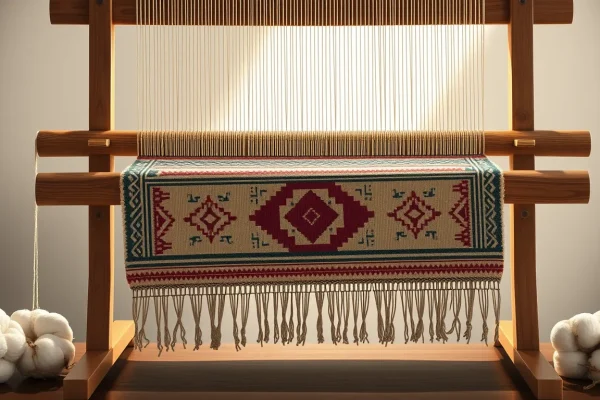
Songket is a hand-woven luxury textile known for gold or silver threads. TFR explains that the name comes from the Malay word sungkit, meaning “to hook”, a reference to the old method of hooking silk or cotton threads into the weave. The metallic effect is usually created by supplementary weft, so the shine is part of the structure, not a surface print. That makes songket heavier, slower to weave, and often ceremonial.
Kain cual from Bangka Belitung is a related coastal tradition with its own identity. Indonesia Travel’s profile describes it as resembling Malay songket but with local motifs inspired by marine life and flowers. It was traditionally called Limar Mentok, is woven with cotton, silk, and often gold threads, and has been used for ceremonial attire since the seventeenth century. Bangka Belitung is a province of islands off Sumatra; its textile story belongs to that coastal Malay world, not to Java’s batik centres.
When buying songket or kain cual, separate technique from pattern language. A lightweight cloth with a songket-style motif may be a printed or machine-woven design, which can be perfectly useful but should not be described as handwoven supplementary weft. Ask: “Is the metallic thread woven in or applied? Is this handwoven? Who made it?” For care, follow the seller’s instructions; metallic threads and delicate dyes may not tolerate rough washing.
Ulos: a cloth with obligations
Ulos is the ceremonial woven cloth associated with Batak peoples of North Sumatra. It is not one design but a family of cloths with different names, patterns, and social uses. Ulos can mark life-cycle events, express kinship, and accompany gifts or ceremonial exchange; specific rules vary among communities and cloth types. For a visitor, that means ulos is not simply a patterned textile to drape over a chair.
North Sumatra is a large province, and Batak areas around Lake Toba are common visitor bases. Medan is the usual gateway city. If ulos is a priority, ask locally which museums, workshops, or cultural centres welcome visitors and whether a guide is recommended. Not every old or ceremonial piece is for sale, and not every seller is authorised to speak for a community. Ask before touching a cloth displayed in a home or church, and ask before wearing one in a ritual context.
A respectful purchase starts with use. Is the piece intended as everyday dress, a gift, a display cloth, or a ceremonial textile? Does it come with care instructions? Is it new or antique? If the seller makes a heritage claim, ask for the maker, place, and type of cloth. If the answer is vague, treat the purchase as a design object rather than a documented heirloom.
Regional context: how the map changes the trip
Indonesia’s textile map is uneven. Some provinces have dense workshop networks and museum collections; others have strong local traditions that are harder for short-term visitors to access. Planning around one or two regions is usually more rewarding than trying to collect “all” Indonesian textiles.
Java
Java is the most accessible starting point for batik. Yogyakarta and Solo are useful bases for workshops, markets, and museum collections, and the island’s transport links make it possible to compare several places in one trip. The caution is scale: “Java” is an island, “Yogyakarta” is a city and a special region, and “Solo” is a city in Central Java. Check addresses before booking a workshop.
Bali
Bali is an island and a province. Tenganan, home of gringsing, is in east Bali, not in the main southern tourist strip. A visit can be combined with other east Bali stops, but confirm transport, village etiquette, and whether weaving demonstrations are available on your dates. Bali’s tourist markets also sell generic textiles; ask whether a piece is locally woven or a resale item.
Sumatra and Bangka Belitung
Sumatra is large enough that songket and ulos belong to different travel plans. Songket traditions are associated with Malay weaving areas, while ulos belongs to Batak communities in North Sumatra. Bangka Belitung, off Sumatra’s coast, has kain cual. Do not assume that one Sumatra base gives you access to all three; build separate stops or accept that you will focus on one.
North Sulawesi
North Sulawesi is a useful contrast. The province’s best-known visitor identity is marine and Minahasa cultural, with Manado as the capital and Bunaken as an island and marine park offshore. Textiles are not the organising theme of most North Sulawesi itineraries. If you are there, ask local cultural organisations about Minahasa crafts and markets rather than expecting a batik trail. This is not a judgement about the quality of local craft; it is a reminder that a textile-focused trip should follow evidence, not a wish to make every province fit the same pattern.
A workable approach: one technique, one place, one conversation
A textile trip works best when it is built around a focused question. Use this sequence to turn interest into a realistic plan.
- Name your purpose. Are you trying to understand a technique, buy a wearable piece, furnish a home, study ceremony, or support a specific community? The answer changes where you go and what you ask.
- Choose one technique first. Batik is the easiest introduction for most visitors. Ikat suits travellers who can slow down and visit weaving areas. Songket suits those interested in luxury textiles and Malay coastal traditions. Ulos suits travellers prepared to learn about ceremony and kinship before buying.
- Choose one base. For batik, use Yogyakarta or Solo. For gringsing, use a Bali base that makes an east Bali visit practical. For songket or kain cual, plan around the relevant Malay or Bangka Belitung location. For ulos, use North Sumatra and ask locally which cultural sites welcome visitors.
- Contact ahead with specific questions. Ask whether the visit is a demonstration, a workshop, a museum talk, or a shop visit; whether English is available; whether photography is allowed; and whether you need to book.
- Budget time for comparison. Look at more than one piece or workshop before buying. Comparing hand-drawn, stamped, printed, and woven work teaches you more than a single sales pitch.
- Record provenance. Note the maker, place, technique, and date of purchase if the seller provides them. Keep receipts for shipping or customs. Provenance is useful for care, resale, and understanding what you own.
If you have only a few days, choose one base and one technique. A week can support one primary base plus a second place if transport is simple. A longer trip can combine Java’s batik with Bali’s gringsing or North Sumatra’s ulos, but each addition needs travel time and local confirmation. Do not schedule a workshop, a market, and a village visit on the same afternoon and assume all three will run to plan.
Practical constraints: money, language, etiquette, and care
Money and buying
Prices in Indonesia are quoted in Indonesian rupiah (IDR). Ask whether a price is per piece, per metre, per set, or per person for a workshop, and whether delivery, insurance, or packing is included. Handwoven cloth, metallic thread, natural dyes, and detailed work can justify higher prices, but a high price alone is not proof of authenticity. Ask about process and provenance, and keep receipts if you are shipping or claiming a purchase at customs.
Language
Useful terms include kain (cloth), tenun (weave or woven cloth), benang (thread), pewarna (dye), and motif (pattern). Batik tulis is hand-drawn batik; batik cap is stamped. Asli means original or genuine, but it is a marketing word as well as a description, so ask what it refers to. English is common in tourist-facing workshops, less so in village contexts; a local guide can help with both language and etiquette.
Etiquette
Ask before photographing people, looms, or ceremonial objects. Do not touch wax pots, dyes, or looms without an invitation. In communities where cloth has ritual value, do not put textiles on the floor or wear ceremonial pieces as beachwear. If you bargain, keep it polite and accept that some workshops have fixed prices. A calm question about technique is usually more welcome than a dramatic price negotiation.
Care and export
Follow the seller’s care instructions. Many handwoven cottons and silks need gentle handling; metallic threads may snag; natural dyes may change with sunlight and washing. Store textiles clean, dry, and away from damp and direct sun. If you buy antique or ceremonial cloth, ask about conservation and export rules. Customs requirements for cultural property, protected materials, or old objects can change; confirm with the relevant customs authority before you rely on a seller’s assurance.
What to confirm before you go
Textile travel depends on local schedules and personal contacts. Before you commit to a route, confirm the details that a general guide cannot settle.
- Current opening hours, exhibition dates, workshop schedules, and whether demonstrations are hands-on or observation-only. Confirm with the museum or workshop directly.
- Market days and village access. Some textile visits depend on local schedules or permission; ask a local guide or cultural office.
- Transport and travel time. Rural weaving villages may be farther from tourist hubs than they look on a map.
- Prices and payment. Ask for the currency, unit, and what is included; do not assume card payment in small workshops.
- Language and accessibility. Ask whether the workshop can accommodate your language, group size, or mobility needs.
- Export and customs. Confirm rules for antique, ceremonial, or protected items with the responsible authority.
The sources used for this guide describe broad traditions and selected examples, not current opening hours or every regional variation. They also do not establish prices, transport timetables, or which workshops are accepting visitors. Treat those as details to confirm close to your travel date.
Next step: ask one better question
Pick one technique and one region, then contact one museum or workshop before you leave. Ask three questions: What will I actually see or do? Is the textile handwoven, hand-drawn, stamped, or printed? What is the appropriate way to handle or wear it? The answers will tell you more than a shelf of unlabelled souvenirs.
If you are starting in Java, make Yogyakarta or Solo your batik study base and compare hand-drawn, stamped, and printed work. If Bali is on your route, read about gringsing before you arrive and plan a respectful east Bali visit. If you are travelling to North Sumatra, learn about ulos before Lake Toba and ask which cloths may be handled or worn. If your itinerary is in North Sulawesi, keep textiles as an optional local encounter rather than the organising theme, and ask locally about Minahasa crafts. That single focused choice will teach you more than a rushed circuit of souvenir shops.
FAQ
What is the difference between batik and ikat?
Batik applies resist to cloth, usually with wax, before dyeing. Ikat binds and dyes yarns before weaving, so the pattern is created in the threads.
Is songket the same as kain cual?
No. Kain cual from Bangka Belitung resembles Malay songket but has its own local motifs and history; Indonesia Travel describes it as traditionally called Limar Mentok and used for ceremonial attire since the seventeenth century.
Can visitors buy ulos?
Some ulos are made for sale, but others have ceremonial or family significance. Ask the seller about the cloth’s type, intended use, and whether it is new or antique; avoid treating ritual pieces as casual souvenirs.
Where should I start if I want to see Indonesian textiles?
Java is the most accessible start for batik, especially Yogyakarta and Solo. For gringsing, look to Tenganan in Bali; for songket and ulos, plan separately in Sumatra. Confirm current workshop and museum details before travelling.